Why interlocking matters
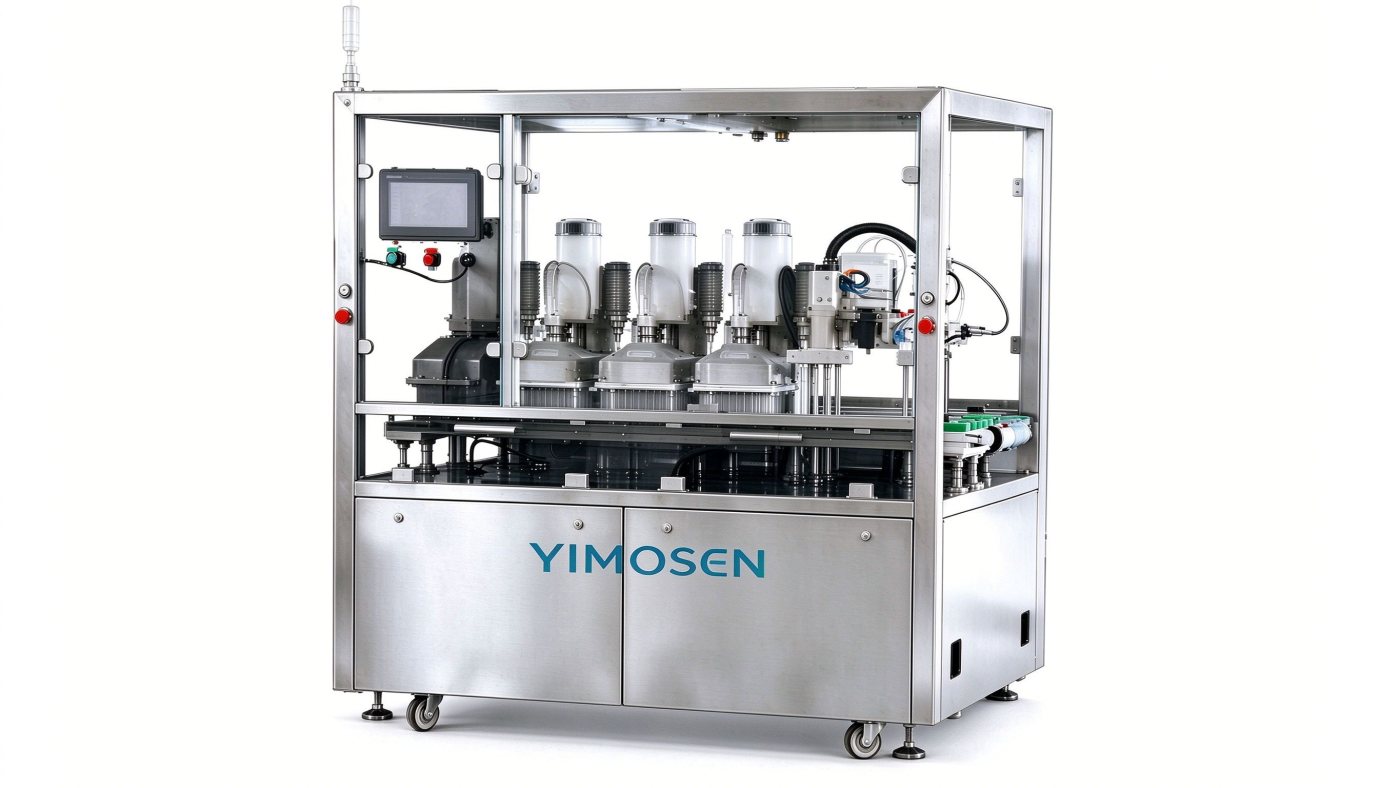
After the coagulant is sprayed, the tube has to pass through the drying station. If the line stops for too long, reagent already inside the tube runs down the wall into the bottom, and once dried it forms a local deposit that gives an uneven clotting effect. The coagulant station and the drying station are therefore interlocked to limit dwell time during a stop.
Spraying: uniformity comes from three design choices
- Ceramic metering pump: corrosion resistant and metered stably, working with an ultra-fine atomising nozzle to spread the reagent evenly over the inner wall.
- Mechanical stirring: avoids the rotor deviation risk of magnetic stirring, keeping the concentration even.
- Regular automatic nozzle cleaning: prevents unstable dosing caused by crystallised needles, with a low-level reagent alarm as a second safeguard.
Drying: four stations with PTC ceramic heaters
Drying uses four stations with PTC ceramic heaters, which are pollution-free and durable. Constant-temperature heating with protection keeps operation safe and stable, and air is filtered directly so dust cannot be blown into the tubes.
Reference parameters
- Coagulant spraying: five heads, 10-35µL standard volume, ±5% (20µL basis, weighed as water)
- Coagulant, liquid addition and drying machine: 380V/50Hz, 16kW, 1.6m×1.35m×1.9m, 400kg
- Output: 16,000-20,000 tubes/hour
Common questions
Can clot activator tubes and separating gel tubes be made on one machine? The coagulant and the drying are done by the same coagulant, liquid addition and drying machine. The separating gel is dosed by a separate non-centrifugal gel filling machine, so the line is planned as "clot activator + separating gel (gel on a separate machine)".